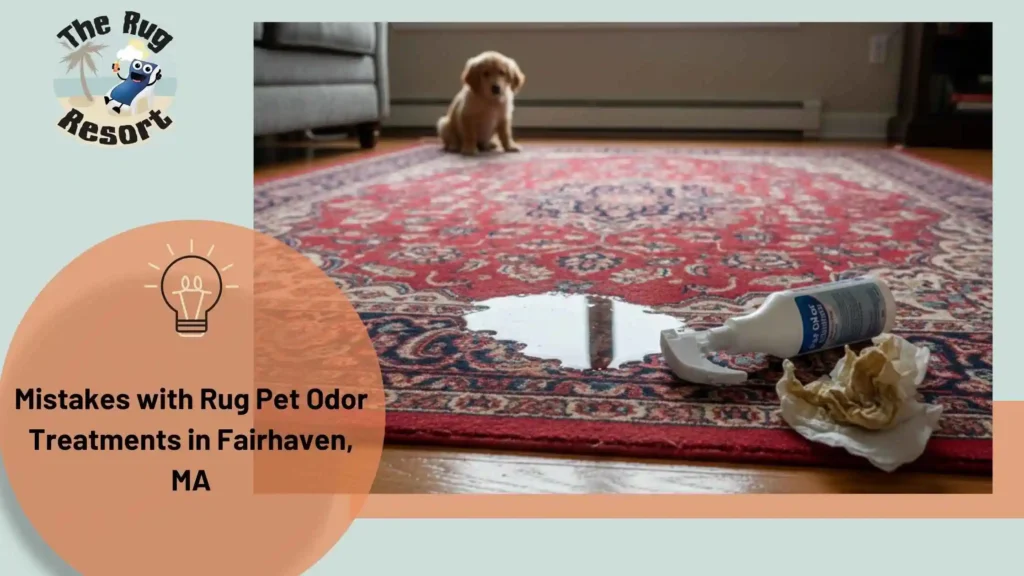
Rugs and pets are a common combination in Fairhaven households, but accidents, spills, and routine pet behavior can lead to stubborn odors. The region’s coastal humidity also makes odors linger longer, causing smells to settle deep into the rug’s fibers and backing. Because of this, homeowners often attempt DIY treatments, but not all methods are safe or effective. In fact, some can make the Pet Odor Treatment worse.
Let’s explore the most common mistakes people make when tackling rug pet odor problems and how to avoid them.
Mistake #1: Using Too Much Water or Oversaturating the Rug
A frequent DIY error is soaking a rug with water or using steam cleaners on delicate materials. This often forces urine deeper into the padding or rug foundation, making odors even stronger.
Why It’s a Problem
- Moisture can get trapped deep inside the rug
- Mold or mildew may develop in humid Fairhaven climates
- Dyes may bleed in wool or Oriental rugs
- The rug’s backing can deteriorate
Professional cleaners use controlled moisture and extraction methods specifically designed for urine removal, preventing damage while removing odors safely.
Mistake #2: Relying on Strong Fragrances to Mask Smells
Many people reach for scented sprays, powders, or candles, hoping to cover the odor. These products do not remove urine; they only mask it temporarily.
Why Masking Fails
- Odors return once the fragrance fades
- Powders can build up in rug fibers and attract dirt
- Strong fragrances may cause discoloration on delicate rugs
- Pet noses detect smells far better than humans, so pets may re-mark the area
True odor removal requires breaking down urine crystals, something fragrances cannot achieve.
Mistake #3: Using Harsh Chemicals That Damage Rug Fibers
Bleach, vinegar, ammonia, and commercial carpet cleaners are commonly used, not realizing these substances can permanently damage rugs.
Risks of Harsh Chemicals
- Color fading or dye bleeding
- Fiber weakening in wool, cotton, or silk rugs
- Chemical reactions that make the odor stronger
- Residue buildup that attracts more dirt
Ammonia, in particular, smells similar to urine, which may encourage pets to soil the same area again.
Mistake #4: Scrubbing Stains Aggressively
Scrubbing may seem helpful, but it can push urine further into the rug while damaging delicate fibers.
Why Scrubbing Is Harmful
- Causes fraying, matting, or texture changes
- Spreads the stain wider
- Distorts the pile, especially in Oriental or handmade rugs
Professionals use blotting, extraction, and pH-balanced solutions instead of friction-based cleaning.
Mistake #5: Ignoring the Rug Pad or Flooring Underneath
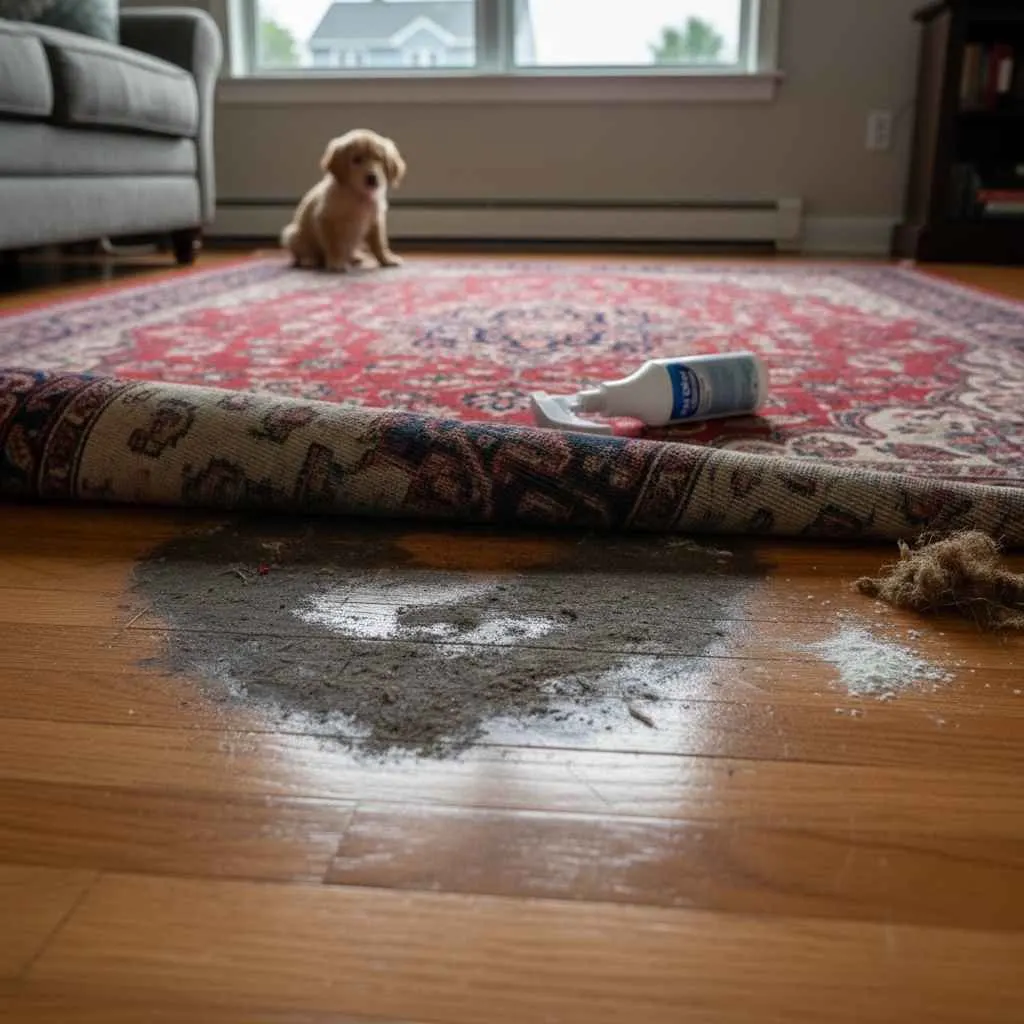
When urine soaks through the rug, the underlying padding or hardwood floor also absorbs the odor. Some homeowners treat only the rug surface, leaving the deeper odor behind.
What Happens When the Base Isn’t Treated
- Odors continue to rise from below
- Floors can stain or warp
- The rug may reabsorb the smell even after cleaning
Professional pet odor removal includes treating the rug, backing, and sometimes the flooring beneath to ensure complete deodorization.
Mistake #6: Waiting Too Long to Treat the Problem
Pet accidents should be cleaned immediately. When they sit too long:
- Urine crystals harden
- Bacteria multiply
- Odors penetrate deeper into fibers
- The stain becomes more difficult to remove
In Fairhaven’s coastal humidity, this process accelerates even faster. Quick action helps, but deep, long-lasting odors often require expert treatment.
Mistake #7: Using “One-Step” Store-Bought Cleaners
Many cleaning products claim to solve pet odor problems instantly, but most are not strong enough for deep urine saturation.
Why They Don’t Work
- Their enzymes are too weak
- They fail on older or set-in stains
- They only treat the surface
- They leave behind residue
Professional-grade enzymatic treatments break down urine at a molecular level, providing permanent results.
Mistake #8: Skipping Professional Help for Specialty Rugs
Fairhaven homes often feature Oriental rugs, wool runners, braided rugs, and handmade textiles. DIY cleaning is risky because these materials are sensitive to water, temperature, chemicals, and agitation.
Specialty Rugs Need Special Care
- Wool may shrink or felt
- Silk may discolor
- Vegetable dyes may bleed
- Hand-knotted structure can loosen
Professionals inspect fiber type and dye stability before choosing the right cleaning method.
How Professional Rug Odor Removal Helps Fairhaven Homeowners
Choosing expert treatment offers long-term benefits:
Deep Penetration Cleaning
Removes urine from fibers, backing, and sometimes flooring beneath.
pH-Balanced Enzyme Treatments
Break down odor-causing crystals safely without damaging fibers.
Safe Moisture Control
Prevents mold, mildew, or shrinking.
Better Indoor Air Quality
Eliminates bacteria and odor-causing contaminants.
Longer Rug Lifespan
Preserves color, texture, and structure, especially for high-value rugs.
Tips for Preventing Future Pet Odors
- Blot accidents immediately, never scrub
- Keep a pet-friendly enzymatic spray on hand
- Vacuum rugs regularly to remove dander and pet hair
- Train pets to avoid the rug’s “favorite spot.”
- Schedule professional rug cleaning every 12–18 months
Call to Action
Consistency keeps your rugs fresh, clean, and odor-free. Contact us today!